


Why Energy Efficient Windows Matter in Chicago
Energy efficient windows Chicago residents are upgrading to can reduce home heating and cooling energy loss by 25% to 30% — and significantly improve overall home performance.
Here's a quick overview of what makes them essential:
| Benefit | What It Means for You |
|---|---|
| Lower energy loss | Up to 30% less heat escaping in winter |
| Energy Efficiency | Optimized for Chicago's extreme temperature swings |
| UV protection | Low-E coatings block up to 95% of UV rays |
| Carbon footprint | ~449 lbs fewer greenhouse gas emissions annually |
| Comfort | Consistent indoor temps, no drafts or hot spots |
Chicago's climate is no joke. Winters regularly bring brutal wind chills, while summers push temperatures into the high 90s. That combination puts serious pressure on any home's heating and cooling system — and old or poorly insulated windows are often the weakest link in the chain.
Think of it this way: your windows are your home's thermal envelope. When they fail, your HVAC system works overtime, energy consumption climbs, and your living space never quite reaches the desired comfort level.
The good news? Modern energy-efficient windows are engineered specifically to handle these seasonal extremes — keeping warm air in during January and blocking radiant heat during July.
Why Energy Efficient Windows Chicago are Essential for the Windy City
Living in Chicago means experiencing "serious personality" from the weather. One day we are basking in lakeside sunshine, and the next, we are bracing against bone-chilling gusts. This is where the "Windy City" moniker truly earns its keep. For our homes, these rapid temperature swings and the famous lake effect create a massive demand for high-performance building materials.
Old windows are essentially holes in your home’s thermal envelope. Research shows that roughly 25% to 30% of a home’s heating and cooling energy can escape through inefficient glass and leaky frames. When the mercury drops to -20°F in the winter, those "leaks" turn into drafts that force your furnace to run constantly. Conversely, in the humid 95°F summers, poor windows allow radiant heat to bake your interior, making rooms unbearable.
By upgrading to Energy efficient windows Chicago homeowners can significantly reduce their carbon footprint—about 449 pounds of greenhouse gas emissions annually—while shielding their interiors from the elements. To ensure a window is actually up to the task, we look toward NFRC performance standards. The National Fenestration Rating Council provides the independent testing and labeling necessary to verify that a window will perform as promised in our specific climate.

Key Ratings for Energy Efficient Windows Chicago
When we shop for windows, we aren't just looking at the style; we are looking at the data. Understanding the NFRC label is the best way to determine how a window will handle a Chicago winter.
- U-Factor: This measures how well the window prevents heat from escaping. For Chicago, lower is better. You want a low U-Factor to keep that furnace heat inside where it belongs.
- Solar Heat Gain Coefficient (SHGC): This measures how much solar radiation comes through the glass. In our region, a lower SHGC helps block out the scorching summer sun, reducing the "greenhouse effect" in your living room.
- Visible Transmittance (VT): This measures how much natural light comes through. High-performance windows can block heat without making your home feel like a cave.
- Air Leakage (AL): This measures how much air moves through the window's joints. In a city known for its wind, a low AL rating is non-negotiable for comfort.
Looking for the Energy Star certification is a great shorthand for quality. Windows with this label meet strict EPA standards tailored to specific climate zones, ensuring they are at least 10% more efficient than standard code-built products.
The Science of High-Performance Window Technology
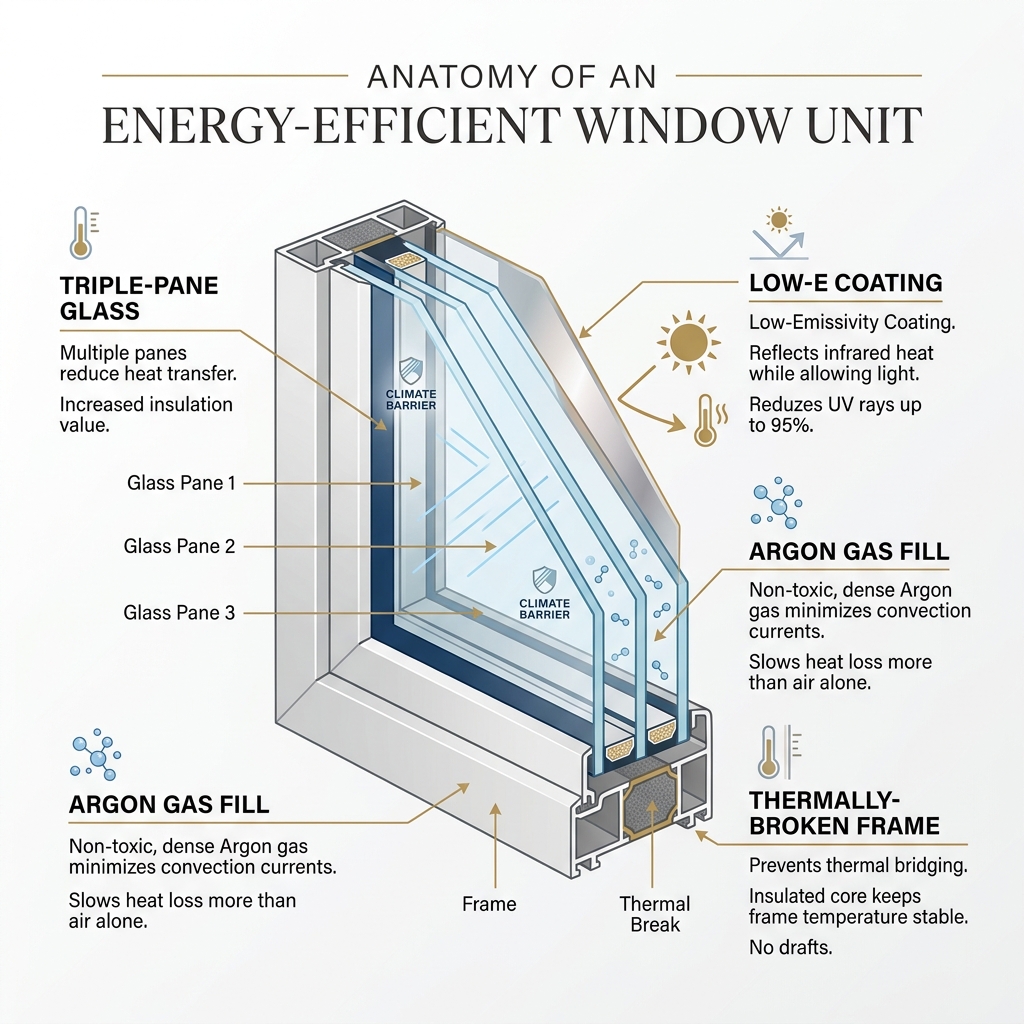
What actually happens inside those glass panes to improve performance? It’s a combination of chemistry and engineering. Modern Energy efficient windows Chicago use multiple layers of glass separated by insulating spacers.
- Low-E Coatings: These are microscopically thin, transparent layers of metal or metallic oxide applied to the glass. They reflect infrared energy (heat) while letting visible light pass through. In winter, they reflect heat back into the room; in summer, they reflect it away.
- Gas Fills: Instead of just plain air between the panes, manufacturers use inert gases like Argon or Krypton. These gases are denser than air and significantly reduce heat transfer.
- Warm-Edge Spacers: Older windows often used aluminum spacers that conducted cold right into the home. Modern spacers are made of non-metallic materials that prevent heat conduction and reduce the chance of condensation.
For a deeper dive into how these technologies work together, you can consult the DOE guide on window updates.
Advanced Frame Materials
The glass is only half the story; the frame holds everything together and provides its own level of insulation.
- Vinyl: The most popular choice for Chicago replacements. It’s durable, low-maintenance, and features multi-chambered designs that can be filled with polyurethane foam for extra insulation.
- Fiberglass: Extremely strong and expands/contracts at nearly the same rate as the glass itself, which helps maintain the seals for decades.
- Wood: Offers a classic aesthetic and natural insulating properties, though it requires more maintenance to prevent moisture damage in our humid summers.
- Thermal Breaks: For frames made of conductive materials, a "thermal break" is an insulating plastic strip placed between the interior and exterior sections of the frame to stop heat cold.
Multi-Pane Glass Benefits
In Chicago, the debate often comes down to double-pane vs. triple-pane.
- Double-pane: These achieve U-values of 1.2 to 1.5 and are a massive step up from single-pane glass, providing a substantial increase in thermal performance when replacing old single-pane units.
- Triple-pane: These can reach U-values of 0.9 to 1.0. While they feature a more complex design, they are often preferred in Chicago for the superior insulation and sound attenuation. If you live near a busy street or the "L" tracks, the noise reduction alone makes triple-pane a winner.
Maximizing Performance Through Professional Installation
You could buy the most advanced, high-tech window in the world, but if it’s installed poorly, it’s just an ineffective piece of glass. Improper installation can cause up to 25% heat loss in houses and a staggering 45% in apartments.
Professional installers ensure a precision fit. They use high-quality flashing and weatherstripping to prevent air infiltration and water damage. They also ensure the window is perfectly level and plumb, which is critical for the long-term integrity of the seals. To understand the complexity involved, you can review these proper installation techniques.
Signs Your Current Windows Need Replacement
Not sure if it’s time to make the switch? Look for these "red flags":
- Visible Drafts: If your curtains move when the window is closed, you have a problem.
- Seal Failure: Fog or condensation trapped between the panes of glass means the insulating gas has escaped.
- Operational Difficulty: If you have to fight to open or lock your windows, the frames may have warped.
- Exterior Noise: If you can hear every conversation on the sidewalk, your windows aren't insulating sound (or heat).
- Water Damage: Rotting wood or peeling paint around the frame often points to hidden leaks.
The Installation Timeline
A typical window replacement in Chicago is faster than most people think. A professional crew can often install up to 15 windows in a single day, spending about 30 to 60 minutes per window. The process usually involves:
- Custom Measurements: Ensuring a leak-proof fit within 1/8 of an inch.
- Manufacturing: Usually taking a few weeks for custom orders.
- Onsite Logistics: Protecting your floors and furniture before the work begins.
- Cleanup: Removing the old windows and debris so your home is ready to enjoy immediately.
Frequently Asked Questions about Energy-Efficient Windows
How do energy-efficient windows improve indoor air quality?
Airtight construction isn't just about heat; it's about what stays out. High-performance windows reduce the infiltration of outdoor pollutants, dust, and allergens. By controlling moisture and preventing condensation, they also inhibit the growth of mold and mildew. Many modern buildings pair these windows with mechanical ventilation systems to ensure a constant flow of fresh, filtered air.
Are triple-pane windows necessary for the Chicago climate?
While double-pane windows are excellent, triple-pane windows offer that extra layer of "Chicago-proof" protection. They provide superior resistance to extreme cold and are much more effective at dampening the sounds of the city. If you are looking for the absolute maximum in long-term durability and comfort, triple-pane is a wise investment in our climate.
How do these windows protect interior furnishings?
The same Low-E coatings that keep your home warm also act as a sunscreen for your belongings. By blocking up to 95% of UV rays, these windows prevent the fading of furniture, hardwood floors, and photos. You get all the benefits of natural light without the damage. This is a key feature of energy-efficient-apartments-chicago where large windows are a major design element.
Conclusion
At The Draper Apartments, we believe that luxury living and modern efficiency go hand-in-hand. Located in the heart of Uptown Chicago, our community combines the best of sleek, mid-century inspired design with the comforts of a high-performance building.
Whether you are enjoying the views through our expansive windows or relaxing by our rooftop pool, you can feel the difference that thoughtful, sustainable design makes. From our state-of-the-art fitness center to our beautifully appointed units, we provide a living experience that is as efficient as it is stylish. Explore our high-end apartment features and see how we’ve redefined modern Chicago living.