



How Pet Limit Policies Work in Rental Communities
Understanding property management guidelines is essential when searching for a residential community that welcomes household animals. Rental properties establish clear contractual terms to manage liability, maintain clean shared spaces, and protect interior living spaces. Property managers implement standardized pet addendums within lease agreements to outline tenant responsibilities, emergency contact procedures, health standard compliance, and registration requirements for each approved animal.
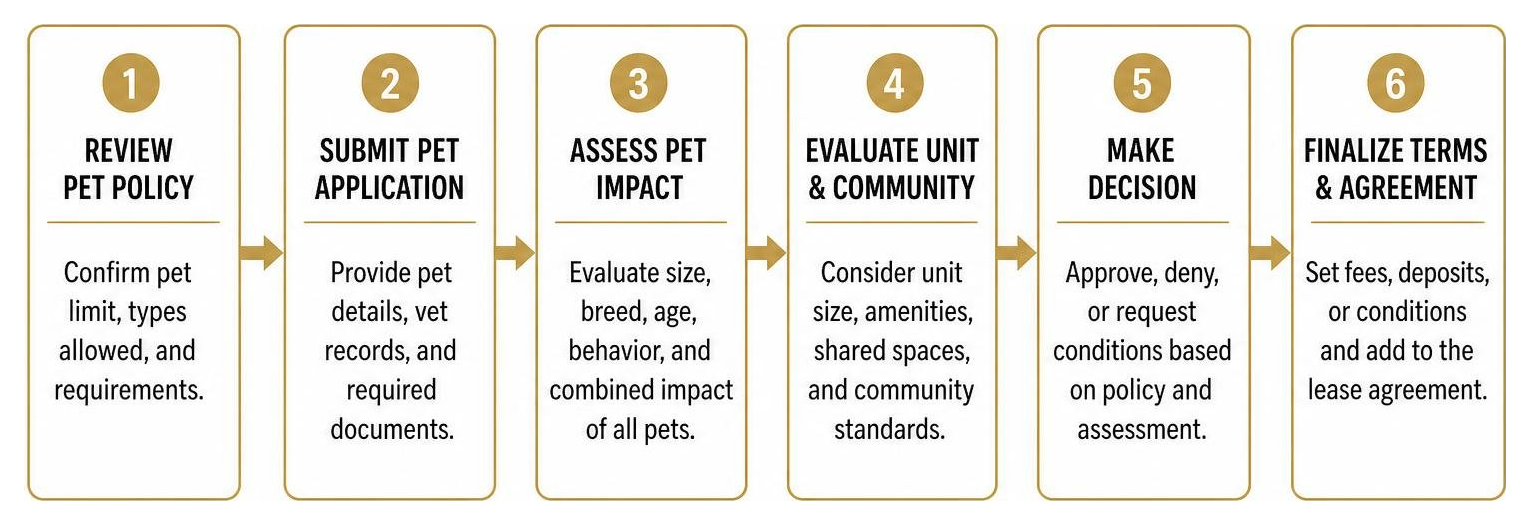
For renters using the search phrase apartments allowing 3 pets, the most important first step is understanding how apartment policies are usually written. In many professionally managed communities, a pet policy is not a casual preference; it is part of the lease package and applies consistently to all residents. The pet addendum commonly identifies the number of approved pets, required records, applicable community rules, and the resident's responsibility for any pet-related maintenance in the apartment home or shared areas.
Pet rules also support predictable building operations. When leasing teams know how many animals are registered in each apartment, they can better manage amenity upkeep, resident communication, and service requests related to common areas. This is why the application stage often includes pet details in addition to standard resident information.
Standard Pet Limits Across Rental Markets
Across the residential property sector, management policies enforce clear operational guidelines regarding pet occupancy. The majority of professionally managed apartment communities enforce a strict maximum limit of two pets per apartment home. When searching for Pet Friendly Apartment Rentals Chicago, prospective tenants will find that standard community rules restrict household pet allowances to a maximum of two animals. Rental properties set these standard two-pet limits to preserve interior finishes, support noise management, and maintain comfortable shared spaces for all residents.
While individual renters may seek general information regarding apartments allowing 3 pets, property regulations across urban rental markets adhere firmly to a maximum limit of two pets per apartment unit. Leasing offices review applicant documentation during the screening process to verify that prospective residents meet these two-pet occupancy guidelines before lease signing. If a household has questions about a specific situation, the best approach is to ask the leasing team directly before submitting an application, rather than assuming that an online pet-friendly label means a higher pet count is available.
Two-pet policies can also vary in the way they define pets. Some communities distinguish between cats, dogs, and other household animals, while others require approval for every animal regardless of type. Because definitions can differ by property, prospective residents should review the written policy closely and keep copies of all signed addendums for their records.
Breed Restrictions and Temperament Screening
In addition to numerical limits capping occupancy at two pets, residential communities frequently enforce standard breed guidelines and behavioral expectations. Property insurance providers and management companies establish designated breed protocols to support overall community harmony and resident comfort.
Rather than relying exclusively on traditional restricted breed lists, modern rental communities may utilize comprehensive behavioral evaluations and temperament screening. Under this framework, pets are assessed on an individual basis regarding training compliance, socialization around neighboring residents, and leash manners. According to resources from the Humane Society of the United States, providing comprehensive background details and health records helps establish responsible pet management and smooth compliance with building policies.
Prospective residents can prepare by gathering records before a tour or application appointment. Clear vaccination records, prior rental references, and a simple pet profile can help leasing teams understand the animal's history and care routine. These materials do not override a community's two-pet maximum, but they can make the approval process more organized when the household falls within the property's stated guidelines.
Strategies for Locating Apartments Allowing 3 Pets

Navigating leasing requirements for a pet-friendly apartment chicago requires structured communication, accurate paperwork, and a thorough understanding of residential management policies. The phrase apartments allowing 3 pets may appear in search activity, but renters should expect most professionally managed communities to confirm a maximum of two pets per apartment home unless an approved assistance animal accommodation applies.
Searching Rentals and Apartments Allowing 3 Pets
When evaluating prospective apartment homes, using targeted research strategies saves time and streamlines the rental process. Online apartment portals provide general filter parameters for pet-friendly buildings, but verifying specific building rules requires direct interaction with the leasing staff. Standard residential management policies cap occupancy at a maximum of two pets per apartment home.
- Utilize online directory tools to filter for pet-inclusive residential buildings.
- Review published leasing guidelines or contact leasing professionals directly to confirm building rules.
- Evaluate larger floor plans, such as spacious multi-bedroom layouts, that comfortably accommodate a two-pet household.
- Verify local neighborhood infrastructure, including nearby veterinary clinics and outdoor walking routes.
When contacting a leasing office, ask specific questions instead of relying only on a listing description. Helpful questions include whether the policy counts each cat or dog separately, whether all animals must be registered before move-in, and which records are required for approval. Renters can also ask how pet amenities are accessed, where designated outdoor relief areas are located, and whether elevator or common-area rules apply when moving through the building with pets.
It is also helpful to organize the search by neighborhood lifestyle. In a dense city environment such as Chicago, pet-friendly living often depends on everyday convenience: nearby sidewalks, access to parks, simple routes to veterinary care, and building amenities that make cleanup easier after walks. A community that clearly publishes its pet standards can help residents understand expectations before lease signing.
Presenting Pet Documentation to Leasing Management
Assembling a comprehensive pet portfolio assists leasing managers in evaluating your application quickly. When submitting paperwork for 2 Bedroom Pet Friendly Apartments, structured documentation demonstrates responsible tenancy.
A complete pet evaluation packet should include:
- Veterinary Health Records: Complete health logs detailing mandatory vaccinations, rabies certificates, and routine physical exams.
- Spay and Neuter Certificates: Official documentation from a licensed veterinarian verifying that pets have been spayed or neutered.
- Previous Landlord Recommendations: Written statements from prior property managers confirming consistent maintenance, lack of property damage, and adherence to community rules.
- Pet Identification Profile: Clear photos alongside factual details covering age, weight, breed mix, and completed obedience training programs.
In accordance with fair housing guidelines established by the U.S. Department of Housing and Urban Development, applicants presenting complete, verifiable records can ensure efficient processing of their residential lease agreements.
A pet profile should be factual and concise. Include the animal's name, species, age, approximate weight, vaccination status, veterinarian contact information, and any completed training. If a previous property manager provides a reference, the letter should focus on lease compliance, common-area behavior, and care of the apartment home. Keeping all records in a single digital folder can make it easier to respond quickly when a leasing professional requests additional details.
Evaluating Amenities and Policy Terms in Multi-Pet Properties

Living in a pet-friendly community is enhanced when property features provide daily convenience alongside clear lease terms for pet maintenance. For households with pets, amenity access and written policy details should be reviewed together. A building may be pet-friendly, but residents still need to understand registration requirements, common-area expectations, elevator etiquette, and cleaning responsibilities before move-in.
Comparing Amenities at Apartments Allowing 3 Pets
Dedicated residential facilities streamline daily pet care routines for residents managing up to the maximum standard of two pets per apartment home. Valuable features to look for when touring communities include:
- On-Site Pet Spa and Wash Stations: Professional grooming rooms outfitted with elevated washing tubs, flexible spray hoses, and commercial blow dryers, such as those featured at Apartments With Pet Wash.
- Dedicated On-Site Dog Runs: Fenced community spaces that allow dogs to exercise conveniently within property boundaries.
- Proximity to Neighborhood Green Spaces: Locations near municipal dog parks, scenic walking paths, and lakefront trails, which define top choices for Apartments Near Dog Parks.
- Comprehensive Pet Conveniences: Specialized resident amenities described in overview guides for Apartments With Pet Amenities.
During an apartment tour, pay attention to how pet amenities fit into everyday routines. A pet wash station can be especially useful after rainy walks or visits to outdoor spaces. On-site dog runs can reduce the need for multiple trips off property during the day, while nearby parks and walking paths can help residents build consistent routines. In an urban setting, these details can be just as meaningful as the apartment layout itself.
Residents should also review community guidelines for shared spaces. Many properties require pets to be leashed or carried in common areas, use designated entrances when applicable, and avoid blocking hallways or elevators. Clear rules help create a consistent experience for all residents, including those who have pets and those who do not.
Understanding Registration and Lease Addendum Terms
Planning for pets involves understanding initial documentation steps and ongoing policy expectations outlined in standard lease addendums.
| Requirement Category | Policy Purpose | Schedule |
|---|---|---|
| Pet Registration | Formal record-keeping of approved household animals | Completed prior to move-in |
| Vaccination Records | Verification of mandatory health standards and community safety | Updated annually |
| Lease Addendum | Contractual agreement outlining pet care and shared-space guidelines | Executed during lease signing |
Reviewing lease documents carefully ensures complete clarity regarding registration guidelines and pet policy terms prior to move-in day.
Before signing, confirm how pet documentation is recorded per apartment home, how registration is updated if an animal is added later within the two-pet maximum, whether vaccination records must be renewed annually, and how move-out inspections address pet-related maintenance. These details help prevent confusion and keep the lease file accurate throughout the residency.
Frequently Asked Questions About Apartments Allowing 3 Pets
Do most communities permit more than two pets per home?
Standard residential property management policies limit household pet occupancy to a maximum of two pets per apartment unit. Standard lease agreements enforce strict numerical caps to manage building maintenance, preserve common spaces, and support comfortable living environments for all community members.
Because online search terms can be broad, renters may see apartments allowing 3 pets used in general housing research even when individual communities do not permit that number of household pets. The most reliable source is always the property's current written pet policy. Leasing teams can explain whether the limit applies to all household animals, whether specific animal types require separate approval, and which documents are needed before move-in.
Are Emotional Support Animals exempt from standard pet caps?
Yes. Under federal civil rights guidelines governed by the Fair Housing Act, verified Emotional Support Animals (ESAs) and service animals are classified as assistance animals rather than household pets. Consequently, standard community pet numerical caps and breed guidelines do not apply to verified assistance animals with appropriate documentation from a qualified professional.
Requests involving assistance animals are handled through an accommodation process, separate from standard pet registration. Residents should follow the property's stated procedure and provide reliable documentation when requested. The process should be based on applicable housing guidelines and the resident's individual request, not on assumptions about the animal or the resident.
What documentation should be prepared before submitting an application?
Prospective residents should compile updated veterinary records, rabies vaccination certificates, proof of spay/neuter status, current photos of each animal, and written landlord reference letters confirming responsible pet care.
It is also useful to prepare a brief summary of each pet's daily routine, training background, and veterinarian contact information. If the pet has lived in an apartment community before, a prior landlord reference can help confirm that the resident followed property rules. Keeping this information current supports a smoother leasing process and helps ensure that all approved pets are properly listed in the lease file.
Conclusion
Finding the perfect apartment home requires research, organized record-keeping, and proactive communication with leasing teams. While the search phrase apartments allowing 3 pets can help renters explore pet-related apartment guidance, professionally managed communities commonly follow standard two-pet property guidelines. Reviewing the written policy early, preparing complete pet documentation, and confirming amenity details before lease signing can make the process more efficient.
A strong leasing checklist should include the property's maximum pet allowance, required vaccination records, registration steps, lease addendum terms, common-area rules, and nearby services such as veterinary offices and outdoor walking routes. With this information organized, residents can compare communities based on the full living experience rather than relying only on a general pet-friendly label.
For premium living in Chicago's Uptown neighborhood, explore contemporary residences at The Draper Apartments by Flats®. Featuring thoughtful floor plans, full-service building amenities, and an ideal location near neighborhood parks, our community is ready to welcome you home. Contact our leasing office today to schedule your personalized tour!